What Are Fermented Foods? A Complete Beginner’s Guide
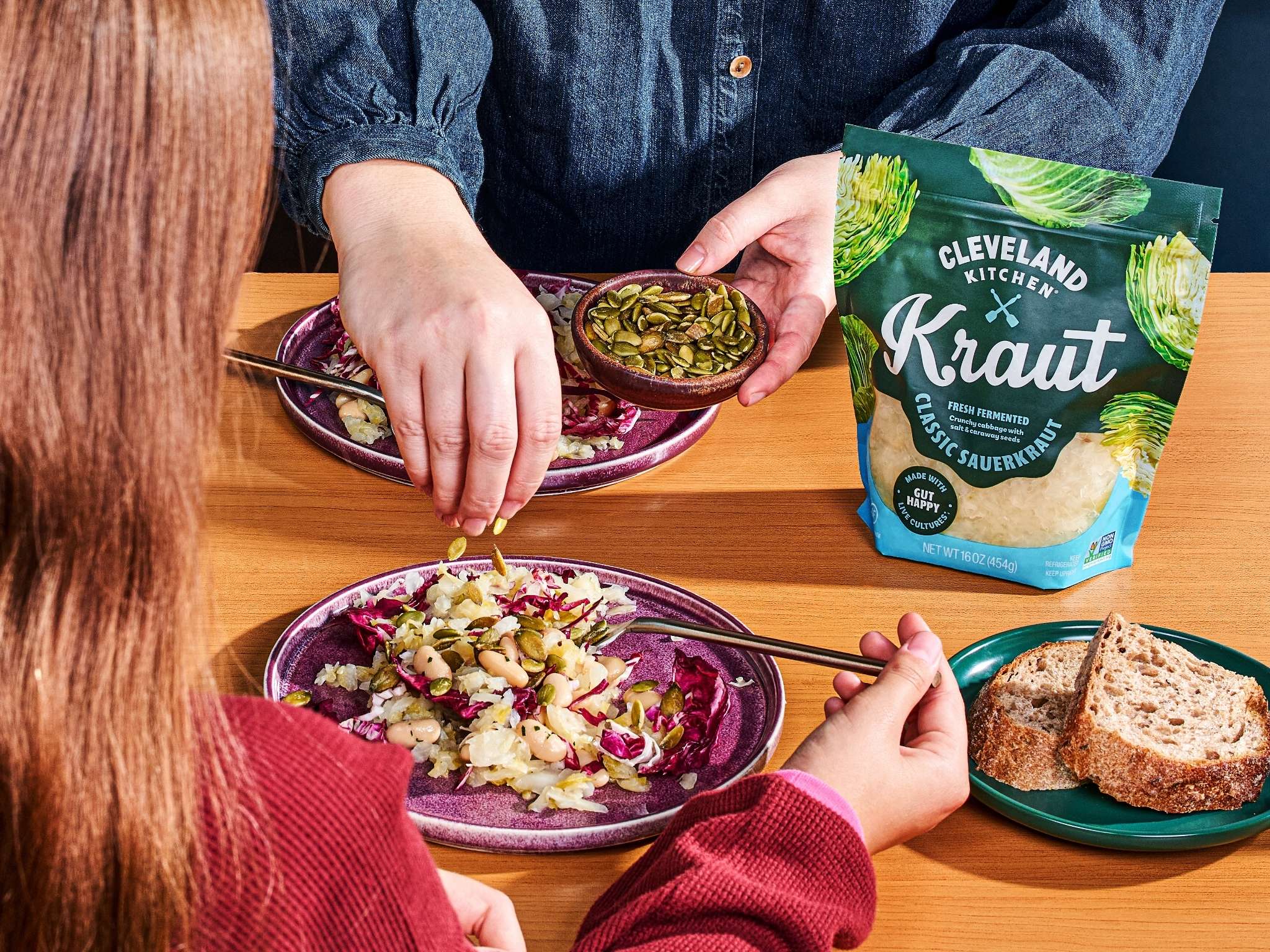
Fermented foods are foods transformed through a natural process where beneficial microorganisms convert sugars into acids. This transformation helps preserve food, creates complex flavors, and contributes to the qualities that make fermented foods so distinctive.
Fermentation has been used for centuries across cultures to extend shelf life and enhance flavor. Today, fermented foods are gaining renewed attention as people look for fresh, flavorful foods that fit into a more gut healthy way of eating.
Understanding how fermentation works helps explain why fermented foods taste the way they do and how the compounds created during fermentation may support digestion and overall gut health.
In this guide you'll learn:
- What fermented foods are
- How fermentation worksx
- Examples of fermented foods around the world
- The health benefits of fermented foods
- The difference between fermented and pickled foods
- Whether fermented foods contain probiotics
- How to start incorporating fermented foods into your diet
What Are Fermented Foods?
Fermented foods are foods transformed through fermentation, a natural biological process driven by microorganisms such as bacteria or yeast. In many vegetable fermentations, including sauerkraut and kimchi, lactic acid bacteria play a central role.
During fermentation:
- Naturally occurring bacteria consume sugars present in the food
- Acids are produced as a byproduct
- The environment becomes inhospitable to harmful microbes
As acidity increases, the food becomes naturally preserved while developing its characteristic tangy flavor and texture.
This is why fermentation has long been trusted as a reliable preservation method—one rooted in both culinary tradition and modern food science.
How Fermented Foods Are Made
Although fermentation techniques vary depending on the food, most vegetable fermentations follow a consistent scientific pattern.
Fresh vegetables are combined with salt, which draws out moisture and creates conditions that favor beneficial bacteria. As these microbes convert sugars into lactic acid, the pH gradually decreases. This controlled acidification stabilizes the food while developing the complex flavor and texture associated with fermentation.
Research published in Frontiers in Microbiology describes vegetable fermentation as a staged process, where different groups of bacteria become dominant over time. As microbial populations shift, the chemistry of the food gradually changes.
Once fermentation reaches the desired balance of acidity and flavor, the product is typically packed and refrigerated to slow further microbial activity.
Why Salt and Temperature Matter in Fermentation
Salt and temperature play important roles in guiding fermentation.
Salt helps limit unwanted microbes while supporting the beneficial bacteria responsible for fermentation. Temperature influences how quickly fermentation progresses and how flavors develop over time.
Together, salt concentration, temperature, time, and microbial activity shape the final product’s taste, texture, and stability.
Why Fermentation Changes Flavor
Fermentation doesn’t just preserve food, it transforms it.
As microbes break down sugars and other compounds, they produce organic acids and other molecules that contribute to tangy, savory, and umami-rich flavors. These complex flavor notes simply don’t exist in the raw ingredients.
This transformation is why fermented foods—from sauerkraut to miso—often deliver depth and complexity that elevate everyday meals.
Examples of Fermented Foods Around the World
Fermentation appears in cuisines across the globe. Some of the most widely known fermented foods include:
- Sauerkraut
- Kimchi
- Yogurt
- Kefir
- Miso
- Tempeh
- Kombucha
While many fermented foods share a tangy flavor, taste alone does not determine whether a food is fermented. The defining factor is the process itself, microbes transforming the food over time.
Health Benefits of Fermented Foods
Beyond their distinctive flavor, fermented foods are often associated with a range of health benefits. Much of this comes from the living microbes and fermentation-derived compounds created during the fermentation process.
Research suggests that regularly consuming fermented foods may support several important areas of health.
Gut microbiome diversity
Fermented foods introduce beneficial microbes and compounds that can help support the diversity of the gut microbiome. A diverse microbiome is generally associated with a more resilient digestive system and better overall health.
Improved nutrient bioavailability
Fermentation can make certain nutrients easier for the body to absorb. During fermentation, microbes help break down complex plant compounds and anti‑nutrients that can interfere with digestion. This process can increase the availability of vitamins, minerals, and beneficial plant compounds already present in the food.
Immune and inflammatory response support
A large portion of the body’s immune system is closely connected to the gut. Because fermented foods can influence the gut microbiome, researchers have explored how they may help regulate immune activity and the body’s natural inflammatory response. Microbes and metabolites produced during fermentation may interact with immune pathways that influence inflammation and overall immune resilience.
Research from the University of California, Davis also found that fermented cabbage (sauerkraut) helped protect intestinal cells from inflammation‑related damage in laboratory models, highlighting how fermentation transforms plant foods into bioactive ingredients.
Support for the gut–brain axis
The gut and brain communicate through a complex network often referred to as the gut–brain axis. Emerging research suggests that the microbes and compounds found in fermented foods may help support this connection, which plays a role in mood, stress response, and cognitive health.
Support for the gut–skin axis
Gut health and skin health are also closely connected. A balanced microbiome may help regulate inflammation and immune responses that influence skin conditions, which is why fermented foods are increasingly discussed in relation to the gut–skin axis.
Importantly, the potential benefits of fermented foods depend on how the food is fermented and whether live cultures remain present when the food is consumed.
Are All Fermented Foods Probiotic?
No, not all fermented foods contain probiotics.
The International Scientific Association for Probiotics and Prebiotics (ISAPP)defines probiotics as "live microorganisms that, when administered in adequate amounts, confer a health benefit on the host.".
While fermentation naturally produces beneficial microbes, processing methods such as pasteurization, heat treatment, or shelf-stable packaging can reduce or eliminate live cultures. In addition, for a microbe to be considered a probiotic, it must be shown to provide a specific health benefit—not simply be present.
Fresh fermented foods that are raw, unpasteurized, and refrigerated are more likely to contain live cultures.
Refrigerated fermented foods—like Cleveland Kitchen’s krauts and kimchis—are kept cold to help preserve the live cultures created during fermentation.
Fermented Foods vs Pickled Foods
One of the most common points of confusion is the difference between fermented foods and pickled foods.
Although the two can taste similar, the processes behind them are fundamentally different.
Fermented foods are preserved through a natural microbial process. Acidity develops gradually as beneficial bacteria transform the food over time. This transformation not only preserves the ingredients but also creates the complex flavor, texture, and microbial ecosystem associated with fermentation.
Pickled foods, on the other hand, are typically preserved by adding vinegar. The acidity is introduced directly rather than produced through microbial activity.
Because vinegar-based pickling does not rely on fermentation, many pickled foods do not contain live cultures unless they were fermented first.
The key distinction is the process itself: fermentation creates acid naturally, while pickling adds acid externally.
At Cleveland Kitchen, we produce both. Our krauts and kimchis are fully fermented using traditional vegetable fermentation methods. We also craft the only pickles and pickled vegetables made using our proprietary LIGHTLY FERMENTED™ process on the market. Because these products are produced in the same fermentation facility as our krauts and kimchis—and are never heat‑pasteurized—they can contain naturally occurring live cultures.
You can think of our production environment as a living fermentation ecosystem, where beneficial microbes play an active role in shaping the flavor and character of every product we make.
Do Fresh Fermented Foods Need Refrigeration?
Fresh fermented foods are typically refrigerated to slow ongoing fermentation and help preserve flavor, texture, and microbial balance.
Even after reaching their ideal acidity, beneficial microbes can remain active. Refrigeration slows this activity while maintaining the qualities created during fermentation.
Shelf-stable fermented foods are often pasteurized or otherwise processed to halt microbial activity. While this extends shelf life, it may reduce or eliminate live cultures.
Refrigeration helps protect the flavor, texture, and microbial integrity developed during fermentation.
How Fermentation Supports Food Safety
Fermentation also contributes to food safety.
As beneficial bacteria become dominant and produce acids, the environment grows increasingly acidic. This lower pH makes it more difficult for many harmful microbes to survive or multiply.
This natural microbial shift is one reason fermentation has been trusted for centuries as a reliable method of preservation, long before refrigeration or modern food processing technologies existed.
Why the Fermentation Process Matters
Not all fermented foods are created equally. While fermentation always involves microbes converting sugars into acids, the details of how it’s carried out influence the final outcome.
Ingredient quality, salt concentration, fermentation time, and temperature all affect flavor, texture, microbial balance, and the compounds formed during fermentation.
Research shows fermentation alters food at a structural level. A peer-reviewed study from the University of California, Davis (using Cleveland Kitchen sauerkraut!) found that fermented cabbage—such as sauerkraut—demonstrated protective effects on intestinal cells in laboratory models, while raw cabbage alone did not. The difference was the fermentation process itself.
As microbes transform plant compounds and generate organic acids, the chemistry of the food changes, shaping how it interacts at a cellular level.
At Cleveland Kitchen, the fermentation process is foundational. Careful sourcing, controlled fermentation, and refrigerated storage help preserve the flavor, texture, and microbial integrity developed during the process.
How to Start Eating Fermented Foods
If you’re new to fermented foods, a little goes a long way.
Rather than making a dramatic change, start small and build gradually. As Jennifer Neil, CNP, IFMCP of Bluestone Functional Health Solutions, recommends: “Start with about 1–2 tablespoons of fermented foods per day and increase gradually as your body adjusts. Over time, many people can comfortably enjoy 1–2 tablespoons with each meal.”
Fermented foods can be easily incorporated into meals you already enjoy—alongside eggs, roasted vegetables, grain bowls, or your favorite protein. Consistency tends to matter more than quantity; small, regular amounts are often easier to tolerate and sustain.
Choosing products made with simple ingredients and traditional fermentation methods—like Cleveland Kitchen’s krauts and kimchis—can help ensure you’re benefiting from the process itself.
The Takeaway
Fermented foods are more than just tangy ingredients. They are the result of a carefully guided biological transformation.
Through the interaction of microbes, salt, and time, fermentation creates stability, complex flavor, and compounds that do not exist in raw ingredients.
Understanding how fermentation works—and why the process matters—allows you to look beyond labels and make more informed choices. Whether you’re adding a spoonful to a meal or exploring new varieties, fermented foods are best enjoyed as a consistent and flavorful part of everyday eating.
Continue reading



Find Us Online
& In-Store
Big flavor. Real benefits. Find us nationwide—always fresh, always in the fridge.



%201.avif)


%201.avif)